 ultimate-guide
Why Choose USA Made Craft Supplies
Table of Contents
- Why USA Made Craft Supplies Matter for Your Projects
- Quality Control and Durability Standards
- Supply Chain Transparency and Traceability
- How to Verify Made in USA Labels
- Quality Differences in Imported vs Domestic Craft Tools
- Sustainable Craft Supply Sourcing and Environmental Impact
- Economic Multiplier Effect and Supporting Local Makers
- Long-Term Cost Analysis: Why Quality Justifies the Investment
- Frequently Asked Questions
Last Updated: October 4, 2026
Why USA Made Craft Supplies Matter for Your Projects
When you're building something by hand, every material choice shapes the outcome. USA made craft supplies offer a fundamentally different foundation than imported alternatives, not just in how they perform, but in what they represent about your creative process.
Supporting domestic manufacturing connects you to a supply chain you can understand and trust.
USA made craft supplies are engineered for durability, sourced with transparency, and produced under verifiable labor standards.
Quality Control and Durability Standards
USA manufacturers operate under stricter quality control frameworks with third-party audits and material testing that catch inconsistencies before products ship.
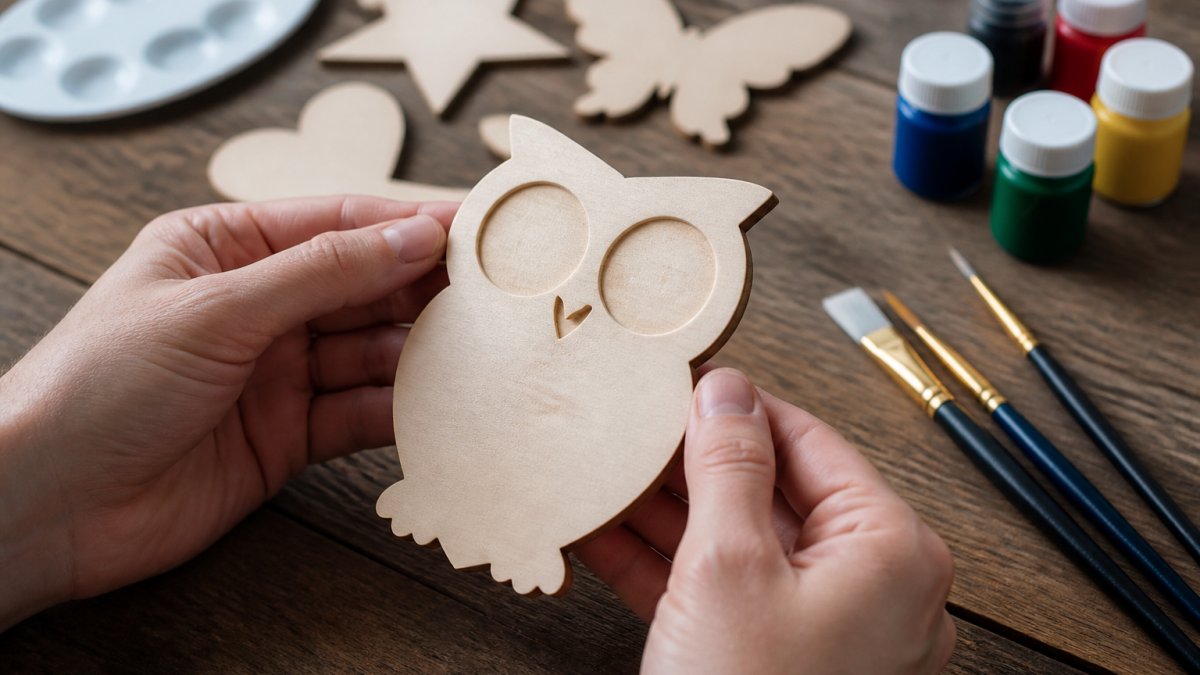
USA made craft supplies withstand actual use: Baltic birch cutouts maintain consistent thickness, fabric panels hold dyes evenly, and tools maintain their edge.

Domestic manufacturing standards create accountability: producers face direct consequences for quality failures, driving investment in better equipment, training, and materials.
USA made wood cutouts arrive properly sanded with controlled edge charring and consistent thickness tolerance, accepting paint more evenly and producing richer stain colors.
Supply Chain Transparency and Traceability
With USA made craft supplies, supply chain transparency is verifiable through documented sourcing, regulatory compliance, and direct manufacturer accountability.
Domestic manufacturers operate under regulatory frameworks requiring documented sourcing: wood from identifiable mills, dyes from EPA-regulated suppliers, labor under documented conditions.
Traceability creates accountability: substandard materials and labor violations are caught through auditable records and regulatory inspection.
Imported craft supplies lack this traceability; supply chain visibility stops at the port, with the journey from raw material to finished product passing through multiple jurisdictions with different standards.
Supply Chain Traceability Checklist for Crafters
Verifying true domestic sourcing requires more than reading a label. Use this checklist when evaluating whether a craft supply is genuinely USA made and sourced responsibly:
Material Origin Questions:
- Does the product description specify where raw materials come from? Vague sourcing language is a red flag.
- For wood products, ask: Are you using domestic lumber, or importing raw wood and processing it domestically?
- For fabric and dyes, can the supplier name the chemical manufacturers or mills providing materials?
- For metal tools, does the manufacturer specify the metal alloy composition and sourcing?
Manufacturing Location Verification:
- Look for a specific facility address, not just corporate headquarters.
- Check if the manufacturer lists multiple facilities and which one made your product.
- Search for the facility name online in business directories and industry certifications.
Documentation and Certifications:
- ANSI certifications for tool standards; Sustainable Furnishings Council for wood products.
- ISO 9001 for quality management.
- EPA compliance statements for chemical products.
- Fair Trade USA certifications for ethical labor practices.
Direct Supplier Communication:
- Email the manufacturer with specific questions about raw material sourcing and manufacturing location. Responsive, detailed answers indicate transparency.
- Ask for a Certificate of Origin or bill of materials.
- Request information about quality control testing and standards.
Red Flags to Avoid:
- "Assembled in the USA" without component sourcing details.
- No facility address or only a P.O. box.
- Vague claims like "proudly American" without specific sourcing.
- Prices significantly lower than competitors with same claims.
- No response to direct questions about sourcing.
How to Verify Made in USA Labels
Not every product claiming to be made in the USA actually is. Verify claims to ensure you're supporting domestic manufacturing.
The FTC requires "Made in USA" products to be manufactured in the United States with no more than negligible foreign content (typically less than 5 percent by cost). This is a legal standard, and violations result in FTC enforcement.
Understanding the distinction between different labeling claims is critical:
"Made in USA" (unqualified): Entire product made in the United States, the strongest claim.
"Made in USA" with qualification: Manufactured domestically but with some overseas raw materials. Acceptable if manufacturing and finishing happen domestically.
"Assembled in USA": Components put together domestically but manufactured elsewhere. Does not meet "Made in USA" standard.
What to Check on Product Packaging and Descriptions
Country of Origin Label: Legitimate USA made craft supplies display "Made in USA" or "Product of USA" on packaging or product tags. If you can't find this statement on the physical product, the claim is questionable.
Manufacturer Location Details: Reputable suppliers list their manufacturing facility location (specific state or city, facility name, contact information) in product descriptions. If only a corporate office address is listed, contact them directly to verify manufacturing location.
Third-Party Certifications and Audit Marks: Look for certification logos from independent testing organizations: ANSI (tools), ISO 9001 (quality management), SFC (wood products), Fair Trade USA (labor practices), and UL (safety). These certifications cost money and require documentation, signaling legitimacy.
Product Documentation and Sourcing Information: USA made craft supplies include manufacturing details: material sourcing, manufacturing process description, and quality control statements. Imported alternatives typically list only country of origin.
Red Flags That Indicate Misrepresentation
Vague or Missing Origin Information: If a product description says "proudly American" or "American-made quality" without specifying where it's manufactured, treat this as marketing language rather than a verified claim. Legitimate manufacturers state their location clearly.
Premium Baltic birch cutout- MADE IN THE USA →
"Assembled in USA" Without Component Sourcing: This phrase often masks overseas manufacturing of components. If a tool is "assembled in USA" but the blade, handle, and fasteners all come from overseas, the domestic value is minimal. Ask where components are sourced before purchasing.
Price Significantly Lower Than Competitors: If a product claims domestic manufacturing but costs substantially less than similar products from established domestic makers, verify the claim directly. Significantly lower pricing often indicates either lower quality, misrepresented origin, or components sourced overseas and assembled domestically.
No Facility Address or Only a P.O. Box: Legitimate manufacturers have production locations with physical addresses. A company that provides only a P.O. box or corporate office address without a manufacturing facility location is a warning sign.
Unresponsive to Direct Questions: Contact the manufacturer or retailer directly with specific questions: "Where is this product manufactured?" and "Can you provide documentation of the manufacturing location?" Responsive, detailed answers indicate transparency.
Quality Differences in Imported vs Domestic Craft Tools
The performance gap between imported and domestic craft tools shows up immediately in use. This isn't theoretical, it's visible in how materials respond to your hands.
USA craft tools feature tighter manufacturing tolerances: cutting tools maintain sharper edges, sewing needles hold their points, and brush bristles remain uniform.
Imported tools often prioritize cost reduction, resulting in batch-to-batch quality variation. With USA made craft supplies, consistency is the baseline expectation.
USA tools cost more upfront but last longer, resulting in lower cost per use. Imported tools may need replacement after one season.
Sustainable Craft Supply Sourcing and Environmental Impact
USA made craft supplies often carry lower environmental costs than imported alternatives when accounting for transportation and manufacturing standards.
Domestic manufacturers operate under EPA regulations governing emissions, waste management, and material disposal, enforced through inspection and penalty.
Imported craft supplies travel thousands of miles, generating carbon emissions that offset any environmental savings from lower manufacturing costs.
Sustainable craft supply sourcing also means waste reduction. Domestic manufacturers often sell scrap material or repurpose offcuts, reducing landfill waste. Quality control standards mean fewer defective products reach consumers, which means less waste in the home studio.
When you choose USA made craft supplies, you're supporting production systems designed to minimize environmental harm. That's not a marketing angle, it's how domestic manufacturing operates under current regulations.
Economic Multiplier Effect and Supporting Local Makers
Every purchase of USA made craft supplies generates economic activity beyond the initial transaction. Money spent with domestic manufacturers stays within local economies, creating jobs and supporting communities.
This is the economic multiplier effect. When you buy craft supplies from a domestic manufacturer, your money goes to wages for production workers, salaries for engineers and designers, payments to local suppliers, and reinvestment in facility improvements. Each of those dollars circulates through the local economy again, workers spend wages at local businesses, suppliers purchase materials from other domestic vendors, and manufacturers invest in equipment from domestic equipment makers.
Imported craft supplies break this chain. Your money goes to overseas production, then to importers and distributors. The economic benefit stays concentrated in the supply chain, with minimal local economic impact.
Supporting USA made craft supplies also sustains the maker community itself. Domestic manufacturers often source specialized materials from other American businesses. They hire local craftspeople who understand quality standards. They invest in training programs that develop the next generation of makers. This ecosystem strengthens when demand for domestic products increases.
Long-Term Cost Analysis: Why Quality Justifies the Investment
The price difference between USA made craft supplies and imported alternatives often misleads makers into thinking they're overpaying. A more accurate analysis looks at total cost over the life of the material.
Quality craft supplies cost more initially but deliver better economics over time. A premium wood cutout costs more per unit than a cheaper imported alternative, but it accepts paint more evenly, requires fewer touch-ups, and produces a finished product that looks professional.
Durable tools show this pattern even more clearly. A quality USA made cutting tool might cost twice as much as an imported alternative, but it lasts three times longer.
This analysis extends to consistency. With USA made craft supplies, you can plan projects knowing materials will perform predictably. With imported alternatives, you might need to adjust techniques or troubleshoot inconsistencies.
Consider also the emotional cost of frustration. Materials that fail mid-project or produce inconsistent results damage the creative experience. Quality USA made craft supplies eliminate that friction, which has real value that extends beyond economics.
When you're choosing between options, compare the total investment: material cost plus time plus final quality plus consistency. USA made craft supplies typically win that analysis, even when they cost more upfront.
Choosing USA made craft supplies means investing in materials that support your creative vision instead of fighting against it. At Teecraftsmarket, we curate supplies like our Premium Baltic birch cutout and Cabinet Grade Baltic Birch plywood Sunflower Shape specifically because they deliver the consistency and quality that serious makers expect.

Frequently Asked Questions
What are the benefits of buying craft supplies manufactured domestically?
Domestic craft supplies offer superior quality control, faster shipping, and transparent manufacturing practices. You know exactly where materials come from and how they're made. Supporting USA manufacturers strengthens the local maker economy and keeps production standards consistent. Domestic suppliers typically offer better customer service and easier returns since they operate within the same regulatory framework.
How can I identify authentic USA made craft supplies?
Look for explicit 'Made in USA' labeling on product packaging and seller websites. Verify claims through the company's supply chain transparency information. Check if the manufacturer lists their location and production facility. Third-party certifications and detailed product descriptions with domestic sourcing details are strong indicators. When shopping with retailers like Teecraftsmarket, genuine USA-made products will clearly state manufacturing location and often include details about materials and production methods.
Are USA made craft supplies more environmentally friendly?
Domestic manufacturing typically reduces carbon footprint through shorter shipping distances and stricter environmental regulations. USA manufacturers must comply with EPA standards and waste reduction requirements. Shorter supply chains mean less packaging waste and lower overall environmental impact. Many domestic craft suppliers prioritize sustainable materials and eco-friendly production methods, though environmental benefits vary by specific manufacturer and product.
Does buying domestic craft supplies support the local maker economy?
Yes. Purchasing USA-made craft supplies creates a multiplier effect: money stays within the domestic economy, supporting manufacturing jobs, local suppliers, and small business growth. When you buy from domestic producers, you're investing in communities and enabling other makers and artisans to access quality materials. This strengthens the entire maker ecosystem and encourages more domestic production and innovation in craft supplies.