 ultimate-guide
How to Start Selling Custom Tees: A Complete Guide
Last Updated: October 28, 2026
Quick Summary
Start selling custom tees by choosing a production method, picking a narrow niche, and pricing from your true unit cost rather than competitors' prices. Print-on-demand has the lowest upfront cost, making it best for testing designs fast before you commit to bulk inventory.
- Print-on-demand carries the lowest upfront cost but a higher per-unit cost than buying inventory.
- A narrow niche like marching band parents beats broad categories with millions of competing listings.
- Build unit cost line by line, including packaging, fees, shipping, and a 3-5% returns allowance.
- Keep your first listing simple: one design, three to five sizes, and clear photos.
- Drop any marketing channel whose acquisition cost exceeds first-order gross profit.
Table of Contents
- Choosing Your Production Method: Print-on-Demand vs. Made-to-Order vs. Inventory
- Finding Your Niche and Target Audience for Custom Tees
- The Best Plain Tees for Graphic Design: Sourcing Blanks That Print Well
- How to Price Custom T-Shirts for Profit: A Realistic Cost and Margin Framework
- Starting a Print-on-Demand T-Shirt Business: Setup, Tools, and First Listings
- Custom T-Shirt Marketing Ideas: Launch Channels, Social Proof, and Repeat Sales
- Quality Control, Sizing, and Returns: Protecting Your Reputation
- Stocking Your Studio: Choosing Blanks and Transfers from Teecraftsmarket
- Frequently Asked Questions
Choosing Your Production Method: Print-on-Demand vs. Made-to-Order vs. Inventory
Print-on-demand and made-to-order both let you sell before you buy, while buying inventory in bulk ties up cash up front. The right choice depends on your budget and how much control you want over quality.
Here is how the three production methods compare:
| Method | Upfront Cost | Best For | Main Trade-off |
|---|---|---|---|
| Print-on-demand | Lowest | Testing designs fast | Higher per-unit cost |
| Made-to-order | Low | Local, hands-on makers | Your time per order |
| Inventory | Highest | Proven designs, bulk savings | Unsold stock risk |
If you plan to print in-house, our guide to the best plain tees for graphic design covers which blanks hold a print cleanly.
Finding Your Niche and Target Audience for Custom Tees
A narrow niche beats a broad one every time. "Funny shirts" competes with millions of listings. "T-shirts for high school marching band parents" has a defined audience, a reason to buy, and far less competition.
Start by listing communities you already understand: local sports teams, hobby groups, professions, schools, or causes. Then answer three questions for each:
- Who buys this shirt, and for what occasion?
- What would make them choose a custom tee over a mass-market one?
- Can you reach this audience through one or two channels?
Your target audience shapes everything downstream: shirt designs, sizing runs, pricing, and where you promote. A niche market also gives you a brand identity to build on, so your shop name and listings speak directly to that group.
The Best Plain Tees for Graphic Design: Sourcing Blanks That Print Well
The Club Crew T-Shirt | 8600 is listed as 4.5 oz and 100% ring-spun cotton. Its listing recommends poly ink and/or a poly blocker when printing on fabrics that contain polyester.
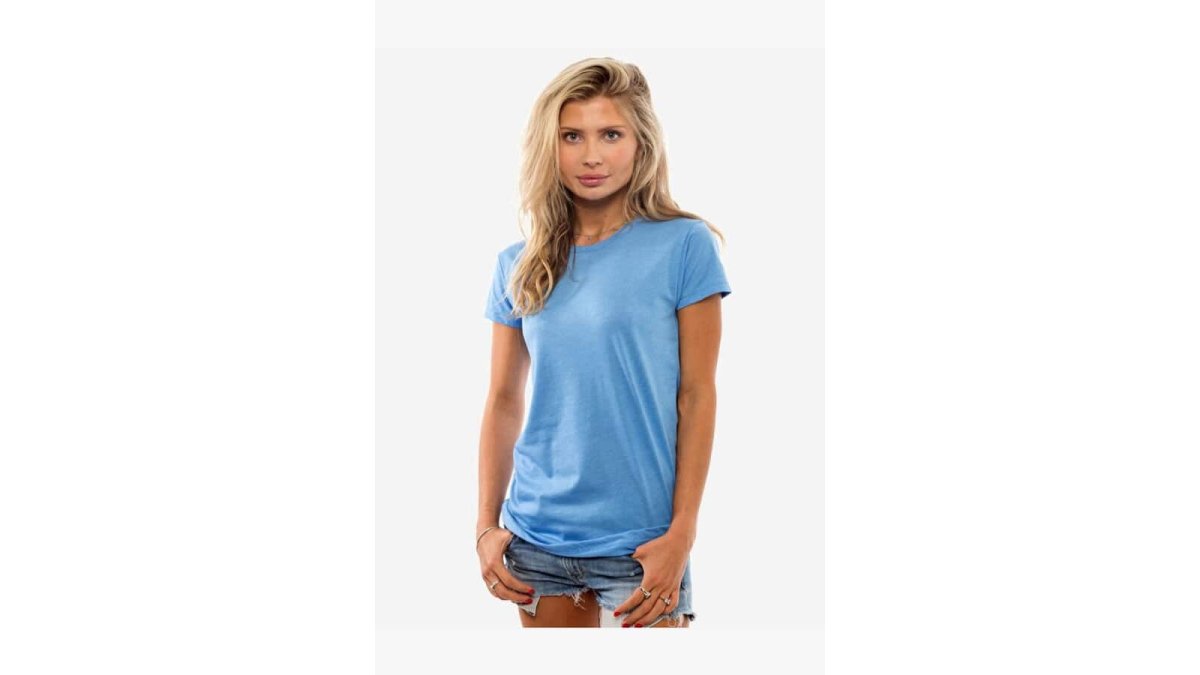
Our Club Crew T-Shirt is listed as 4.5 oz and 100% ring-spun cotton, with preshrunk fabric, side seams, and tear-away labels. For dye work, the Ladies Crew PFD 8600 arrives prepared for dye as a blank canvas, and we offer custom color dyeing on orders as small as 300 pieces.

How to Price Custom T-Shirts for Profit: A Realistic Cost and Margin Framework
Price custom T-shirts by building up your true unit cost line by line, then adding your target profit, not by matching what competitors charge. When calculating costs, consider packaging, platform fees, shipping subsidies, and returns.
Step 1: Build your true unit cost
List every cost that varies with each shirt sold:
- Blank garment: the wholesale cost per tee at your order quantity.
- Print or transfer: ink, transfer paper, or the print partner's per-shirt charge.
- Packaging: mailer, tissue, sticker, and any insert card.
- Payment processing: typically around 2.9% + $0.30 per transaction on common processors.
- Marketplace or platform fee: a percentage of the sale price on marketplaces, or a monthly subscription on a standalone store.
- Shipping: what the carrier charges minus what you collect from the buyer.
- Returns and defects allowance: set aside a realistic percentage of revenue, even 3-5%, to cover misprints, sizing returns, and replacements.
Step 2: Worked example (print-on-demand)
| Line item | Amount |
|---|---|
| Blank + print | $9.00 |
| Packaging | $1.25 |
| Marketplace fee (3% of $25) | $0.75 |
| Payment processing (2.9% + $0.30) | $1.03 |
| Shipping shortfall | $0.50 |
| Returns allowance (4% of $25) | $1.00 |
| Total unit cost | $13.53 |
| Gross profit per shirt | $11.47 |
| Gross margin | ~46% |
Step 3: Set a floor price and a target price
Use this formula to find the minimum price that protects your margin:
Floor price = Total unit cost ÷ (1 - Target margin)
Step 4: Track margin per design, not just overall
A best-seller at a thin margin can quietly drag down your average order value. Review margin by design every quarter, and re-run the math whenever blank costs, shipping rates, or platform fees change. If a design's margin falls below your floor, raise the price or retire the design.
Starting a Print-on-Demand T-Shirt Business: Setup, Tools, and First Listings
Keep your first product listing simple: one design, three to five sizes, clear photos. Add designs as orders come in.
Custom T-Shirt Marketing Ideas: Launch Channels, Social Proof, and Repeat Sales
Most custom T-shirt marketing advice stops at "post on social media."
First-month launch sequence
Week 4, Run a small paid test and a local push. Put a modest budget behind your best-converting listing on one platform, and pair it with an in-person channel: a team event, a school fair, a gym, or a cross-promotion with a small local business. Local sales generate the photos and word-of-mouth that feed online conversion.
The four numbers to track
- Conversion rate: orders ÷ store sessions.
- Average order value (AOV): revenue ÷ orders.
- Customer acquisition cost (CAC): total marketing spend ÷ new customers.
- Repeat-purchase rate: share of customers who buy a second time.
The rule that ties it together
If a channel's CAC is higher than the gross profit from that customer's first order, drop it and move the budget to the channel that converts. A channel that loses money on the first order can still be worth keeping if repeat-purchase rate is high, but only if you are actually measuring it.
Quality Control, Sizing, and Returns: Protecting Your Reputation
Publish a clear returns policy that covers misprints and sizing issues. Handling a return quickly costs less than the review a slow response earns you.
Stocking Your Studio: Choosing Blanks and Transfers from Teecraftsmarket
At Teecraftsmarket, we curate well-made, practical products for makers.
Our blank tee shirt is listed as a blank T-shirt. The rubber duck iron-on patch is listed for children's clothing, pillow covers, and quilts.


Our products are chosen for practical utility.
Frequently Asked Questions
How much does it cost to start selling custom tees?
The Club Crew T-Shirt is listed at $5.10, and the Ladies Crew PFD 8600 is listed at $9.90.
Do you need a license to sell custom shirts?
Yes, you generally need a business license or permit from your state or local government, and you must register for sales tax if you sell taxable goods. You may also need an EIN from the IRS for tax filing. If you use other people's artwork or trademarks, you need permission or a license. Check your state's requirements before your first sale and keep records of all registrations.
Should you use print-on-demand or make custom tees yourself?
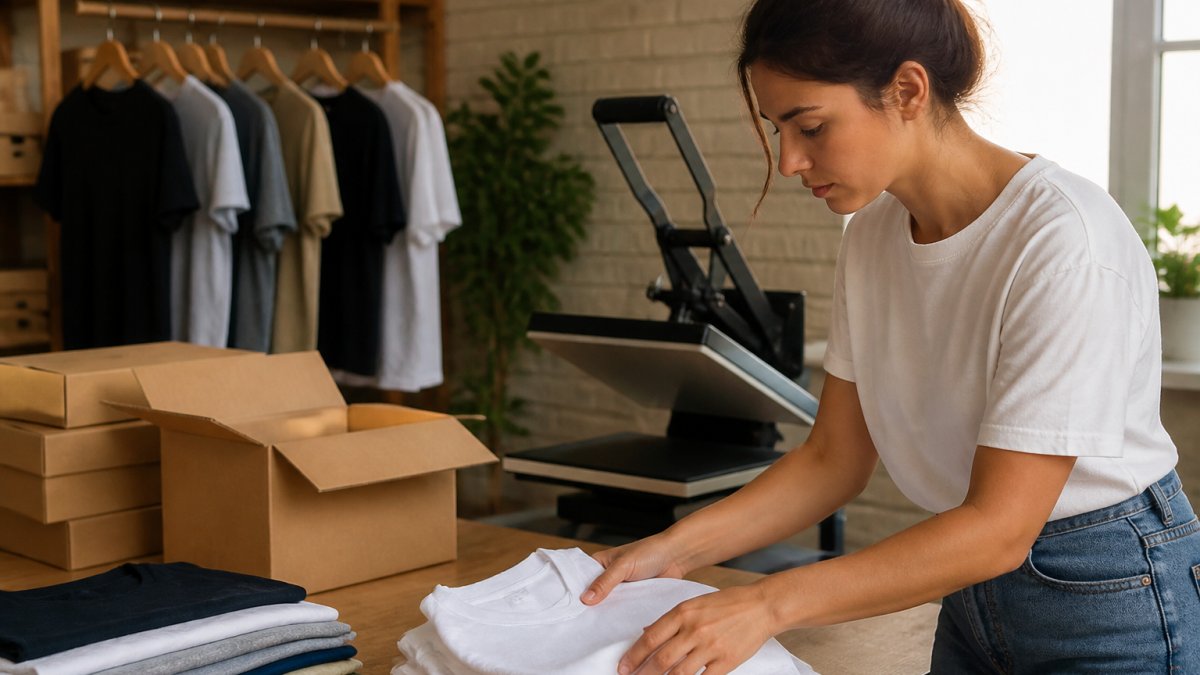
Choose print-on-demand if you want low upfront cost and no inventory risk, but expect higher per-unit costs and less control over quality. Make tees yourself with a heat press or screen printing if you want better margins and hands-on quality control, but you'll need equipment and storage space. Many sellers start with print-on-demand to test designs, then switch to in-house production for bestsellers. The best plain tees for graphic design, like ring-spun cotton blanks, work well for both methods.
How do you price custom T-shirts for a profit?
Calculate your total unit cost: blank shirt, printing or transfer, packaging, and any platform fees. Then apply a markup that covers overhead and profit, typically 2x to 3x your cost for direct-to-consumer sales. For example, a shirt costing $8 to produce might retail at $24-$28. Factor in shipping and payment processing fees. Review your margins after your first 20 orders and adjust based on what customers actually pay.
Where can you sell custom T-shirts online?
You can sell through your own e-commerce store, online marketplaces like Amazon or Etsy, or social media shops. Each channel has different fees and audiences. Start with one channel to keep order fulfillment simple, then expand once you understand your conversion rate and average order value. Local promotion at markets and events can also drive early sales and build your brand identity.
What type of t-shirts sell the most?
Classic crew-neck tees in neutral colors and soft ring-spun cotton tend to sell best because they suit everyday wear. Graphic tees with niche humor, local pride, or hobby themes also perform well when aimed at a specific target audience. Offering a range of sizes from XS to 2XL and using preshrunk fabric helps reduce returns. Quality blanks with tear-away labels, like those from Teecraftsmarket, make customization easier and improve the final product.
Starting a custom tee business is less about having the perfect design and more about choosing a production method that fits your budget, pricing for real profit, and shipping quality every time. Teecraftsmarket supplies the blanks and heat transfers that make that possible, with a curated selection of well-made tees, iron-on designs, and craft supplies chosen for real-world maker use. Browse our blanks and transfers, add a few to your cart, and get your first listing live.