 how-to
Why Do Premium Fabric Panels Cost More?
Last Updated: October 25, 2026
Quick Summary
Premium fabric panels cost more because every stage of making them costs more: longer-staple fibers, tighter weaving, sharper printing, and stricter quality checks. Better fiber, denser construction, and tighter print control each add cost at the mill, which is why a premium panel and a budget panel can look identical on screen but behave very differently after the first wash.
- Fiber and weaving together account for the majority of a greige fabric's cost, while printing and finishing add the rest.
- Many quilting-weight cottons sit in the roughly 4-5 oz/yd² range, while apparel and home-decor fabrics run heavier.
- Ask sellers for abrasion resistance, colorfastness, shrinkage, and fiber content and weight before buying.
- Premium pays off most in projects that get washed, worn, or handled a lot, like quilts and apparel.
- Total installed cost is the panel price plus wasted fabric plus the cost of replacing a failed piece.
Table of Contents
- Why Premium Fabric Panels Cost More: The Short Answer
- What Makes Fabric Expensive: The Cost Stack Behind Every Panel
- How to Tell If Fabric Is High Quality Before You Buy
- Fabric Panel Uses for Quilting and Sewing: Where Premium Pays Off
- How to Compare Fabric Quality and Price Like for Like
- Total Installed Cost: Labor, Waste, and Replacement
- Pick Your Next Panel at Teecraftsmarket
- Frequently Asked Questions
Why Premium Fabric Panels Cost More: The Short Answer
Premium fabric panels cost more because every stage of making them costs more: longer-staple fibers, tighter weaving, sharper printing, and stricter quality checks.
Here is the short answer in one line: a premium fabric panel is a panel made with better fiber, denser construction, and tighter print control, and each of those choices adds cost at the mill.
That matters because the price tag is the last thing you see and the first thing you judge.
What Makes Fabric Expensive: The Cost Stack Behind Every Panel
Every yard of printed fabric carries four costs: fiber, weaving, printing, and finishing. Budget fabric cuts corners in all four. Premium fabric pays more in all four. That is the whole story, but the useful part is knowing how each line item actually moves the price, because the four do not contribute equally.
A rough rule of thumb among mill sourcing managers is that fiber and weaving together account for the majority of a greige (unprinted) fabric's cost, while printing and finishing add the rest and vary most between suppliers.
Fiber composition and fabric weight
Fiber is the biggest single lever. Long-staple cotton (varieties such as Pima or Egyptian cotton) costs more than short-staple upland cotton because the longer fibers spin into a smoother, stronger yarn with fewer joins.
Weight matters too. Fabric weight is usually quoted in ounces per square yard (oz/yd²) or in grams per square meter (GSM). A heavier fabric uses more raw material per yard, so it costs more to produce.
Weaving and construction methods
Weaving is the second cost driver and the one shoppers understand least. A plain weave is the cheapest to produce; a tighter sett (more threads per inch) slows the loom and raises the cost per yard.
Thread count is a useful signal but not the whole story. A high count on poor yarn still feels rough. What you want is a tight, uniform weave with a smooth hand and no slubs.
Printing quality, colorfastness, and design detail
Printing is where cheap panels give themselves away. Low-cost printers run fast, use less ink, and skip the extra passes that sharpen fine lines. The result is soft edges, muddy mid-tones, and colors that drift between panels in the same run.
Colorfastness is the test that matters after washing. Premium printers cure the ink properly so it bonds to the fiber. Budget printing often skips that step, and the design fades or bleeds.
Finishing treatments and durability
Finishing is the last cost line and the easiest to skip. Premium fabric may be sanforized (pre-shrunk), mercerized (treated to improve luster and strength), or given a soil-release or wrinkle-resistant finish. Each adds a process step and cost. Budget fabric often ships without these treatments, which is why it can shrink or pill after the first wash.
How to Tell If Fabric Is High Quality Before You Buy
You can judge fabric quality in about sixty seconds with three checks: look at the weave against light, feel the hand, and read the fiber content on the bolt. If any one of those feels off, walk away. But the checklist only gets you so far, the stronger move is to ask for the measurable evidence behind the quality claims, because that is where premium and budget panels actually separate.
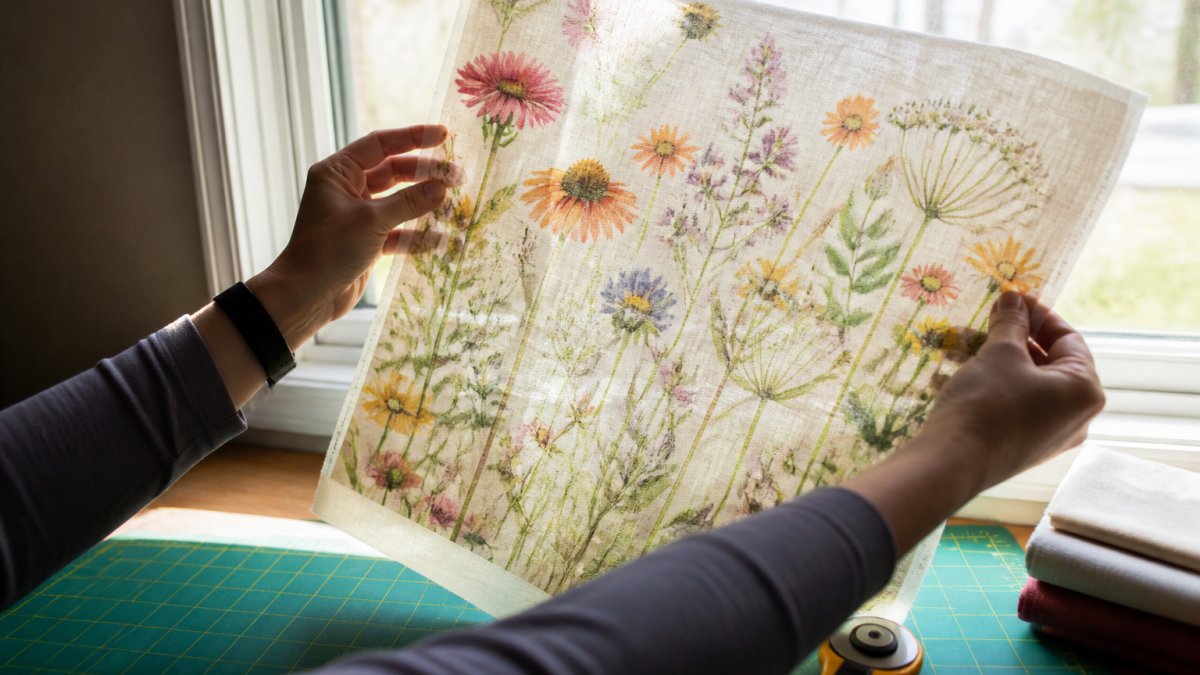
Here is the quick checklist we would run in any shop:
- Hold the fabric up to light. Even, tight weave with no visible gaps is a good sign.
- Rub the surface. If fibers pill or shed immediately, the yarn is short-staple.
- Read the bolt label. Look for fiber content, weight, and where it was printed.
- Check the print edges. Sharp lines and clean color boundaries mean better printing.
Weave, thread count, and hand feel
Thread count is a useful signal but not the whole story. A high count on poor yarn still feels rough. What you want is a tight, uniform weave with a smooth hand and no slubs.
Hand feel is the honest test. Drape the fabric over your hand. Premium fabric falls softly and holds its shape. Budget fabric feels stiff or limp in the wrong way.
The measurable evidence behind quality claims
This is the part most buying guides skip. Premium panels usually come with documented performance data; budget panels rarely do. Ask the seller for these four specifications, and treat a missing answer as a data point in itself:
Stellar Rhinestone Stretch Mesh Fabric | Blue Moon Fabrics →
- Abrasion resistance. Fabric durability is commonly measured with a Martindale abrasion test, reported as the number of rubs before the fabric shows wear. Higher rub counts mean a tougher surface. A seller who can quote a rub count is telling you the fabric was actually tested.
- Colorfastness. Look for a gray-scale rating after laundering and after light exposure. Ratings run from 1 (severe change) to 5 (negligible change); most quality programs target the upper end of that scale. A panel with a documented rating will hold its color through repeated washing far better than an untested one.
- Dimensional stability (shrinkage). Pre-shrunk fabric is typically tested and reported as a percentage change after washing. Lower shrinkage means your finished piece keeps its size, critical for quilts and garments that are washed often.
- Fiber content and weight. These should be stated on the bolt or listing, not inferred. Weight in oz/yd² or GSM and a clear fiber percentage are the baseline facts every premium panel should publish.
What the evidence tells you in practice
A panel with a documented abrasion rating, a high colorfastness score, and low shrinkage is a panel you can wash, wear, and sell with confidence. A panel with none of those numbers may still be fine for a decorative piece that never gets washed, but you are buying on faith, not evidence. That distinction is the real difference between premium and budget, and it is the one you can actually verify before you spend money.
Fabric Panel Uses for Quilting and Sewing: Where Premium Pays Off
Premium pays off most in projects that get washed, worn, or handled a lot. Quilts, baby blankets, apparel, and anything you plan to sell all reward better fabric.
For quilting, a premium panel keeps its color through repeated washing and holds a crisp seam line.
If you want to see what premium panels look like in real projects, our guide to the best fabric panels for home decor walks through examples and layout ideas.
Where premium rarely pays off: one-off crafts, test pieces, and anything that will not be washed.
How to Compare Fabric Quality and Price Like for Like
Comparing fabric quality and price fairly means comparing the same fiber, the same weight, and the same print method. Most price comparisons fail because they compare a lightweight budget panel to a heavyweight premium one.
Use this framework:
| What to compare | Budget panel | Premium panel | What it tells you |
|---|---|---|---|
| Fiber content | Often blended or short-staple | Long-staple or single-fiber | Durability and hand feel |
| Fabric weight | Lighter per yard | Heavier per yard | Body and wash life |
| Print method | Fast, low-ink | Slower, multi-pass | Line sharpness and color depth |
| Colorfastness | Rarely tested | Tested and documented | Fade resistance after washing |
| Waste per project | More misprints and fray | Fewer rejects | True cost per finished piece |
That last row is the one most shoppers miss. A cheaper panel that frays badly or prints off-register wastes fabric, and wasted fabric is money you already spent.
Total Installed Cost: Labor, Waste, and Replacement
Total installed cost is the real number: the panel price plus the fabric you waste plus the cost of replacing a failed piece.
Count these three costs before you buy:
- Material cost - the price per usable yard, not per yard on the bolt.
- Waste cost - offcuts, misprints, and frayed edges you cannot use.
- Replacement cost - the price of remaking the piece when the first one fades or pills.
Premium fabric usually wins on total cost for anything long-lived. Budget fabric wins on total cost for one-off projects. That is the honest trade-off, and it is why we do not push premium for every single project.
Pick Your Next Panel at Teecraftsmarket
Choosing a panel comes down to one question: will this project be washed, worn, or sold? If yes, buy the better fabric. If no, buy what fits your budget.
At Teecraftsmarket, we stock premium quilting cotton panels printed in the United States, chosen for tight weave and clean print. One example is our Woodland Baby Deer 3 Fabric Panel, a 100% premium quilting cotton panel that shows exactly what better fiber and tighter printing look like in person.

Start with a swatch, check the weave, and compare total cost rather than sticker price.
Frequently Asked Questions
Why do premium fabric panels cost more than basic fabric?
The price gap comes from four cost centers: fiber (100% quilting cotton instead of poly blends), construction (tighter weave and higher thread count), printing (sharper detail and better colorfastness), and finishing treatments that resist fading and abrasion. Premium panels also carry higher shipping and handling costs because they are printed in smaller runs. A $4.99 panel like the Woodland Baby Deer 3 Fabric Panel reflects that full stack, not just the cloth itself.
How can you tell if a fabric panel is good quality before it arrives?
Ask three questions before ordering. First, what is the fiber composition? 100% quilting cotton behaves predictably; blends shrink and pill differently. Second, what is the fabric weight in gsm? Heavier panels hold shape and resist show-through. Third, is there a print method stated and a swatch option? Order a swatch for exact color matching, since screen colors differ from printed cotton. A seller who publishes these specs is usually selling a panel worth the price.
Are expensive fabric panels worth it for quilting?
For a quilt you plan to keep or gift, yes. Premium panels cut cleaner, fray less at the edges, and hold color through washing, which matters because a quilt gets washed repeatedly over years. The math shifts on practice pieces and test blocks, where a cheaper panel is fine. Match the panel to the project: premium for heirloom quilts and garments, standard for muslins and samples.
What affects the price of printed fabric panels?
Print method, color count, and run size drive most of the cost. Detailed multi-color designs need tighter registration and more setup, and small print runs spread that setup across fewer yards. Add fiber cost, finishing treatments for fade and abrasion resistance, and shipping, and you have the full picture. That is why two panels with the same dimensions can differ by several dollars per yard.
The gap between budget and premium fabric is not marketing. It is fiber, weave, print, and finishing, and you can check all four before you spend a dollar. Get started with Teecraftsmarket and choose panels built to hold their color and shape through every wash, every quilt, and every project you sell. Add to Cart when you are ready.